- Telephone
- Email
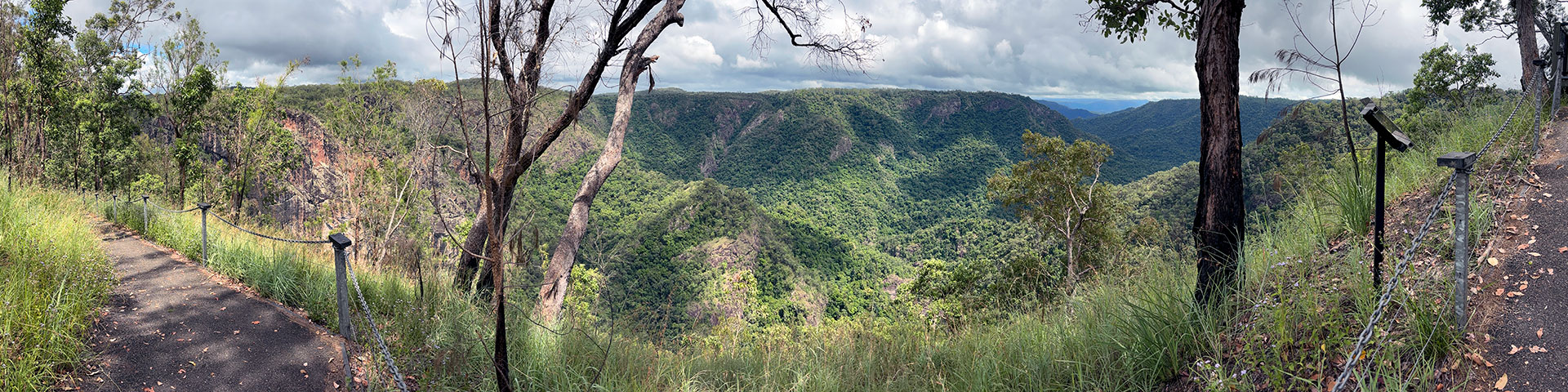
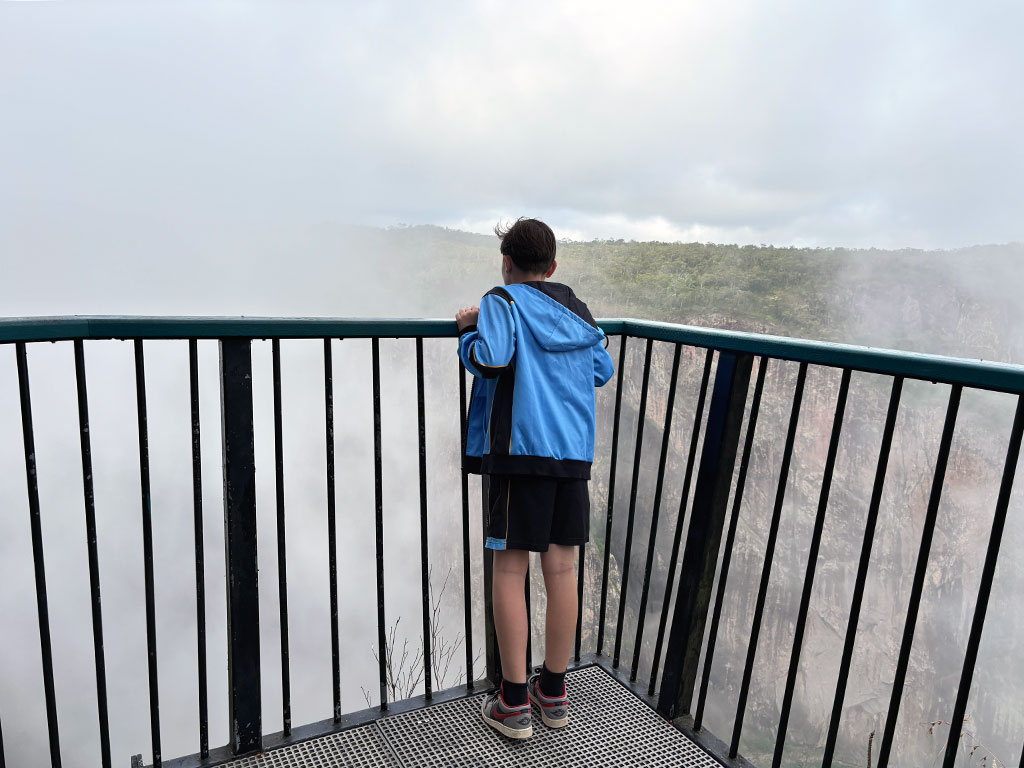
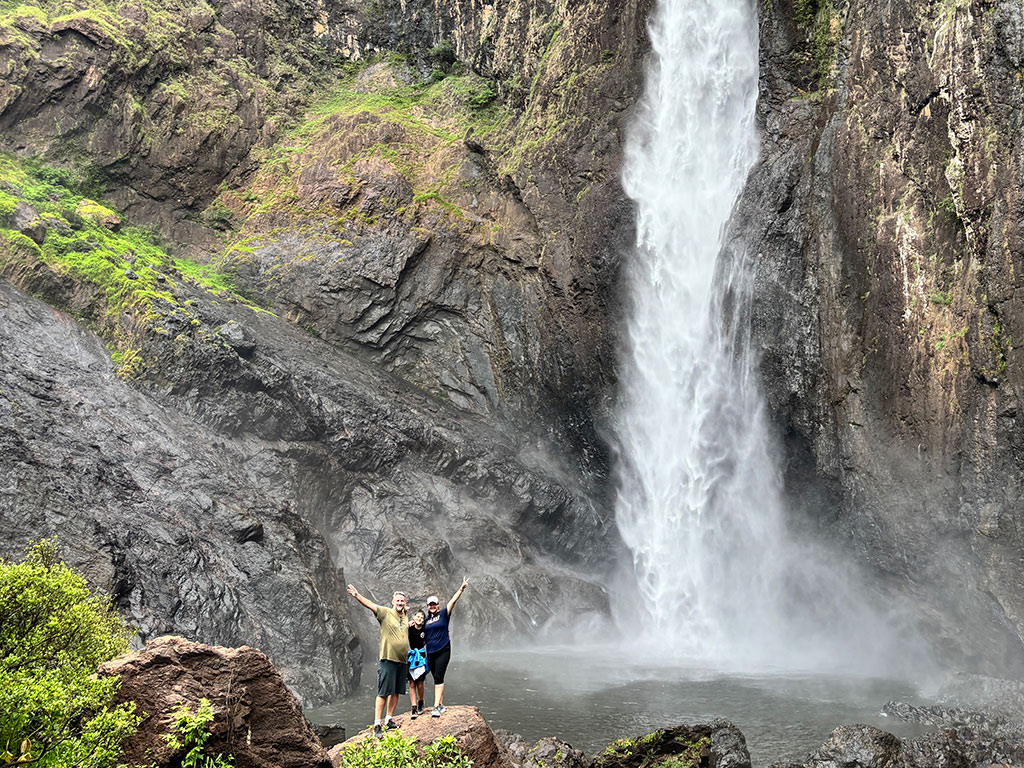
Wallaman Falls is a special place. Australia’s highest single drop waterfall, located in the world’s oldest continually surviving tropical rainforests. Seen from the top viewing platform, you can take in the scale and size of the fall and the gorge. Clouds and mist swirl around, sometimes obscuring the view and sometimes revealing it. It’s an impressive sight. Standing at its base though, is where the magic happens. The thunder of the water, the cool breeze generated from the falls and a light swirling mist, which creates a constant backdrop of shimmering rainbows, whilst providing the perfect environment for ferns and moss to thrive. It is magical. It’s a place that makes you stop and appreciate the power of nature, where you’re dwarfed by the Jurassic landscape that surrounds you – and then you get in the water. It’s fresh and cold. The pool is 20m deep and while the water itself is not ‘currenty’, the power of the falls will prevent you from getting too close to the water ‘splash zone’. This is definitely a must-see destination and we’ve got everything you need to know, right here.

We went on 26 January 2025. We arrived at around 7.30am, spent around 1 hour at the bottom swimming and exploring, and made it back to the car park at around 10.45am.
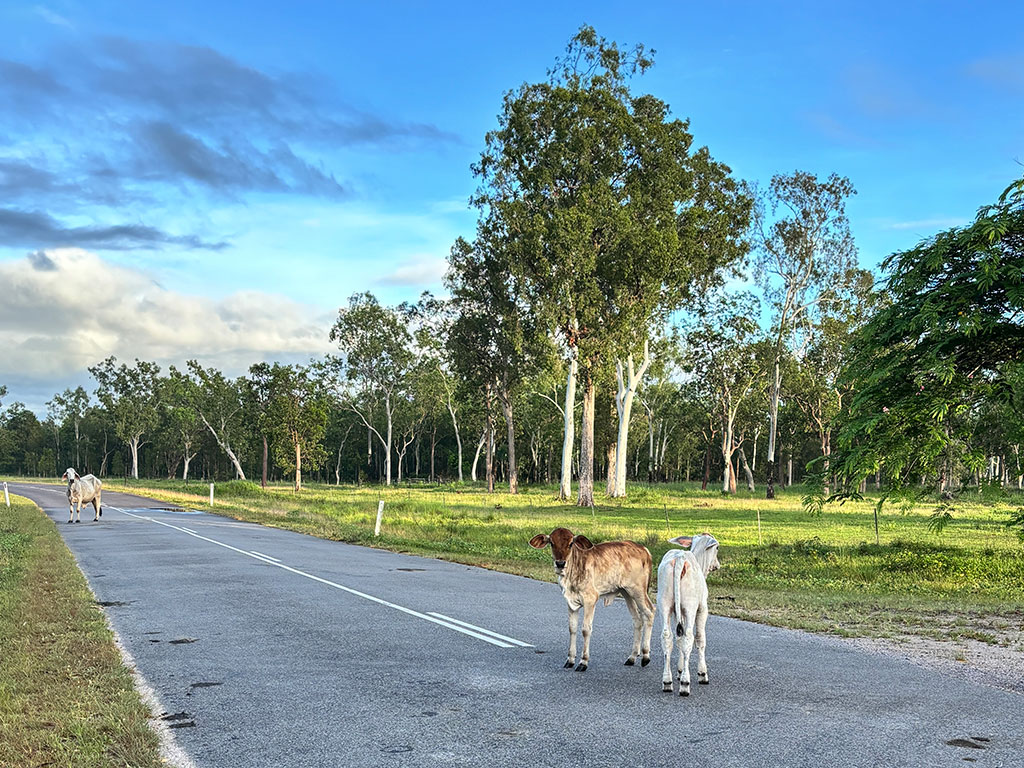
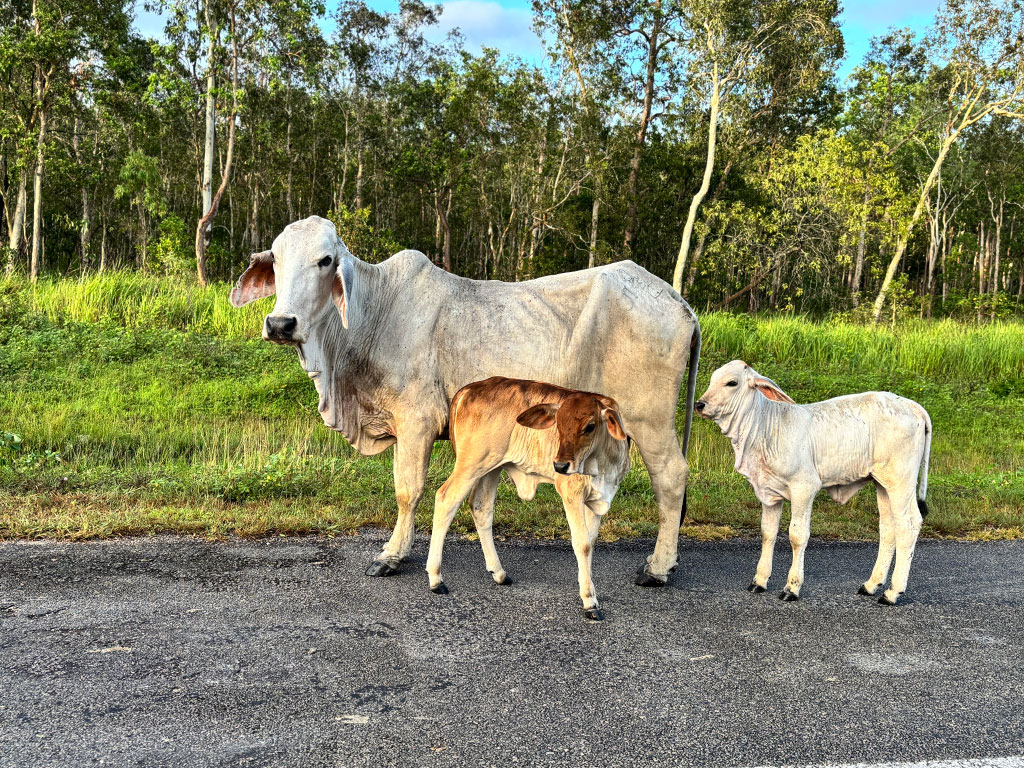
Wallaman Falls is hidden amongst the mountains in the most southern section of the Wet Tropics World Heritage Area, in the Girringun National Park. It’s around a 4 hour drive south of Cairns (2.5 hours north of Townsville). The closest township is Ingham, which is where we stayed the night before, so we could make an early start. The drive from Ingham to Wallaman Falls takes just over 1 hour, winding its way through sugar cane fields and cattle stations – watch out for cows crossing the road – before entering the Lannercost State Forest and finally, Girringun National Park. The top lookout and Wallaman Falls car park is 540m above sea level, so you do drive up a range to get here, and keep your eyes peeled for cassowaries – we saw a Dad and 3 chicks (and some feral pigs too). At this elevation you are in open forest which is dominated by she-oaks. It’s a very short walk from the car park to the top lookout, which is accessible to everyone. However, if you want to walk to the base – and we highly recommend this – it’s a 3.2km return walk and we’ve got all the details below.
“Wallaman Falls is AMAZING!!!! What a breathtaking place to visit. From the top you take in the size and scale of the falls and gorge, and from the bottom you are dwarfed by this mighty waterfall and feel a small person in a giant, Jurassic landscape. It’s quite the walk from top to bottom and back again, but it’s so very worth it. I grew up in Cairns and went to university in Townsville, and yet this was my first ever visit to Wallaman Falls – what a special place and experience to share with my husband and son.” – Julie Johnston
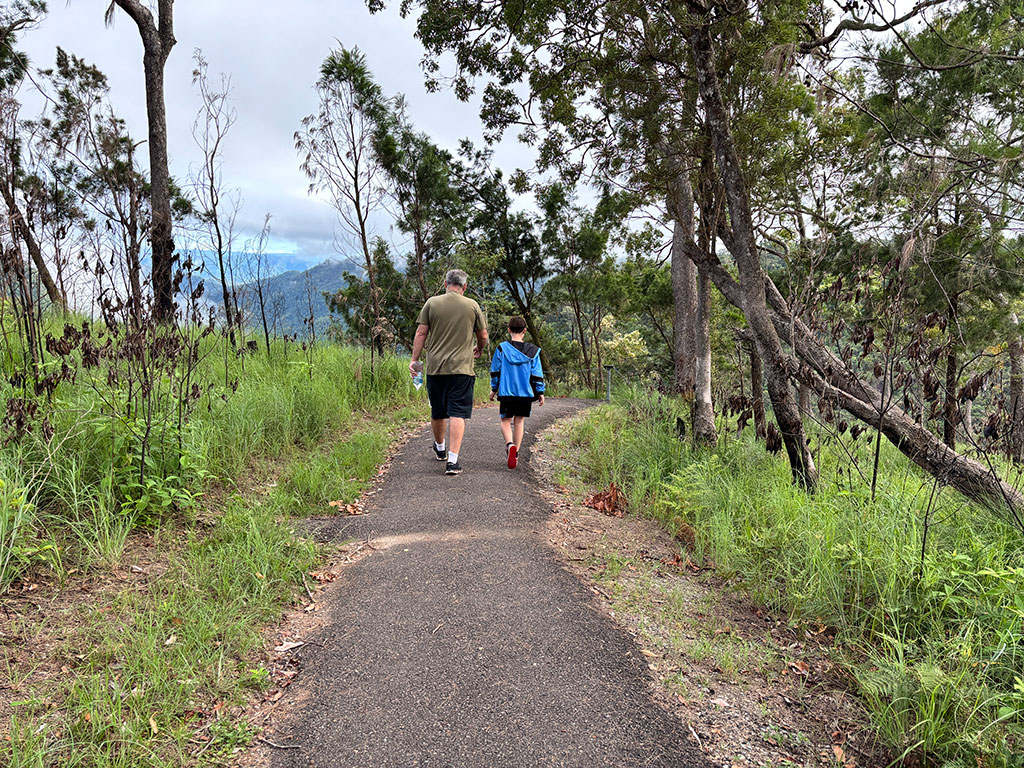
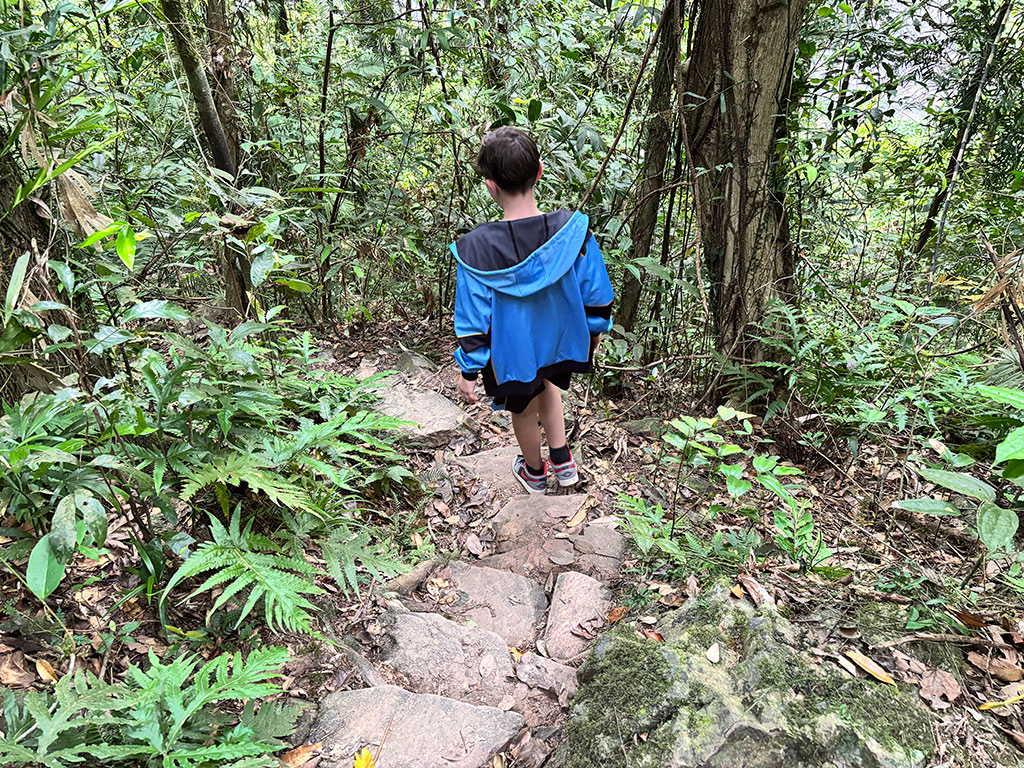
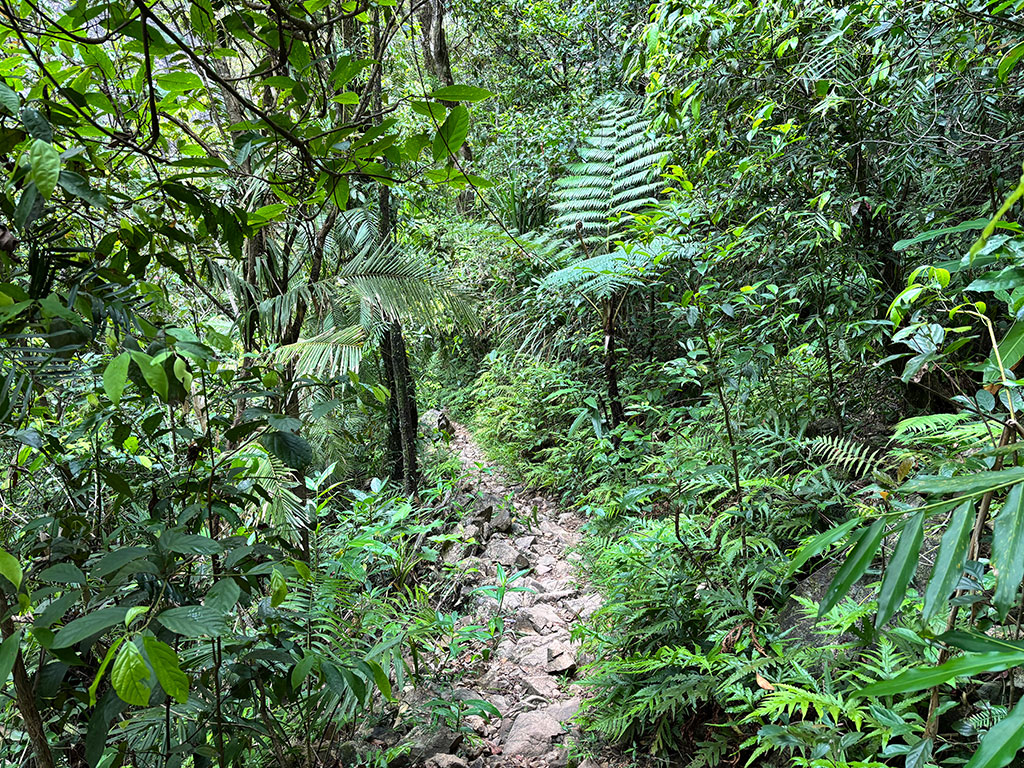
The Djyinda Walk from the top car park to the base of Wallaman Falls is classified as a Grade 3 trail. A warning sign at top states: “Only fit people should attempt this walk. People have died here. Others have suffered heat stress and heart conditions walking this track. It might look easy but it becomes steep and rough halfway down.” This is 100% accurate. We strongly suggest getting there early morning to do this one, which is what we did. The track is steep with switchbacks and some steps and is unformed in some places. We found it strenuous, going down and coming back up. For context, I wouldn’t classify us as being super fit, but we do walk around 5km every day with our dog. This walk includes some hills. So, in our opinion, you don’t need to be an athlete to complete the Djyinda Walk, but you should have a reasonable level of fitness and you should definitely take water with you.
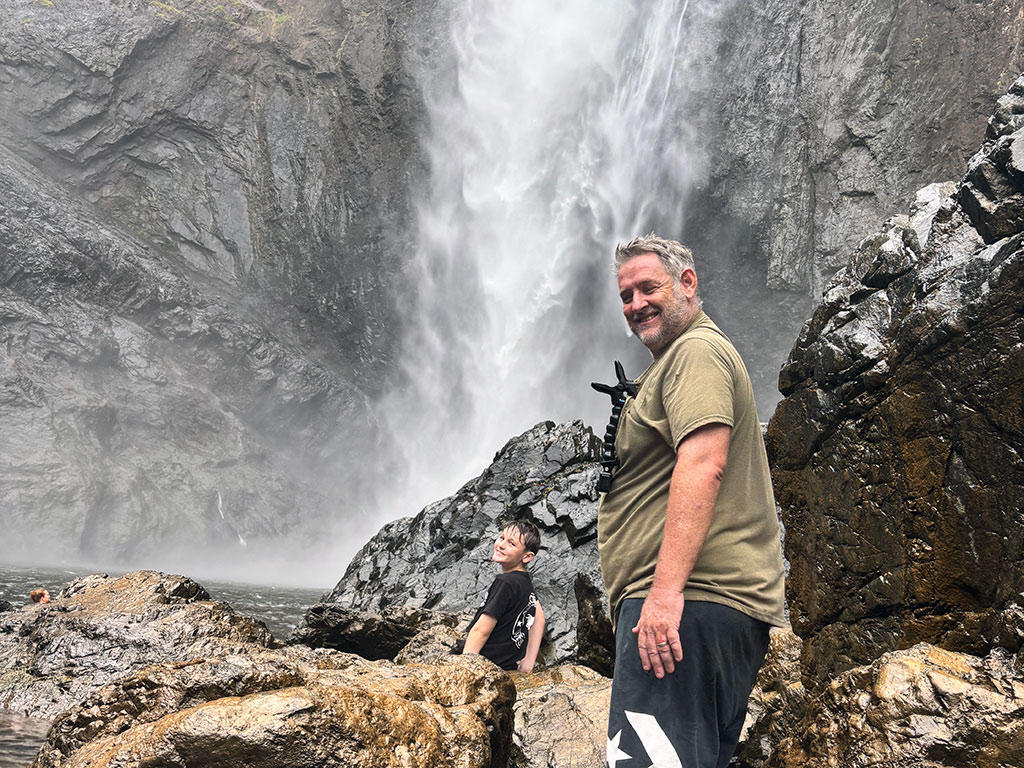
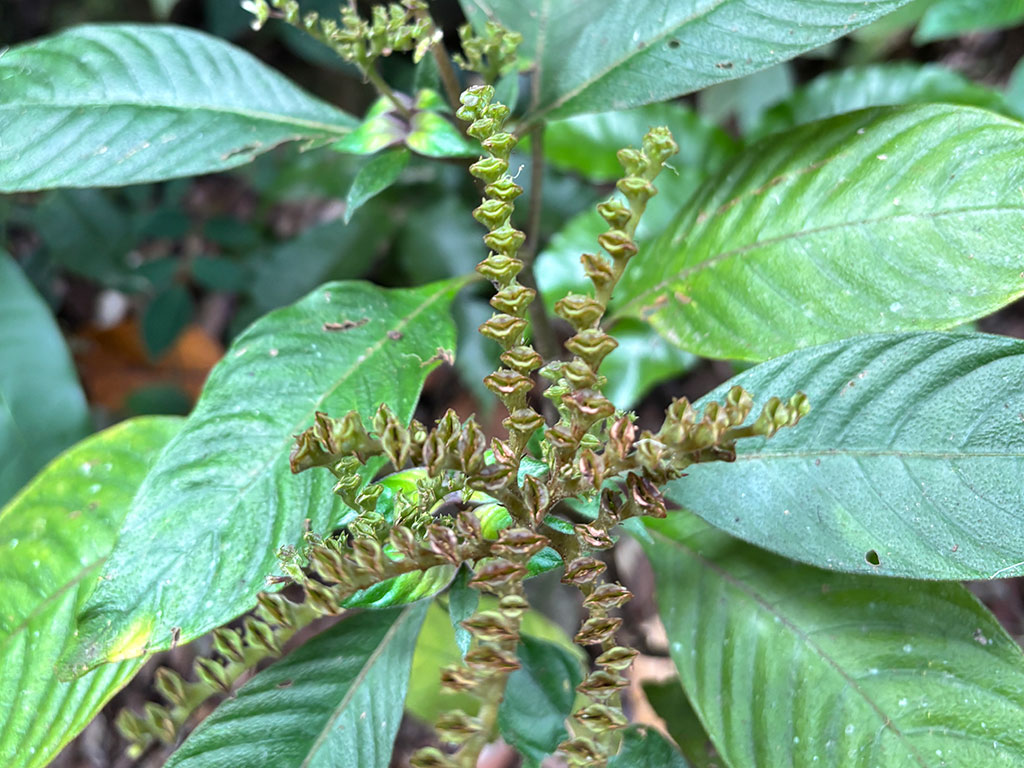
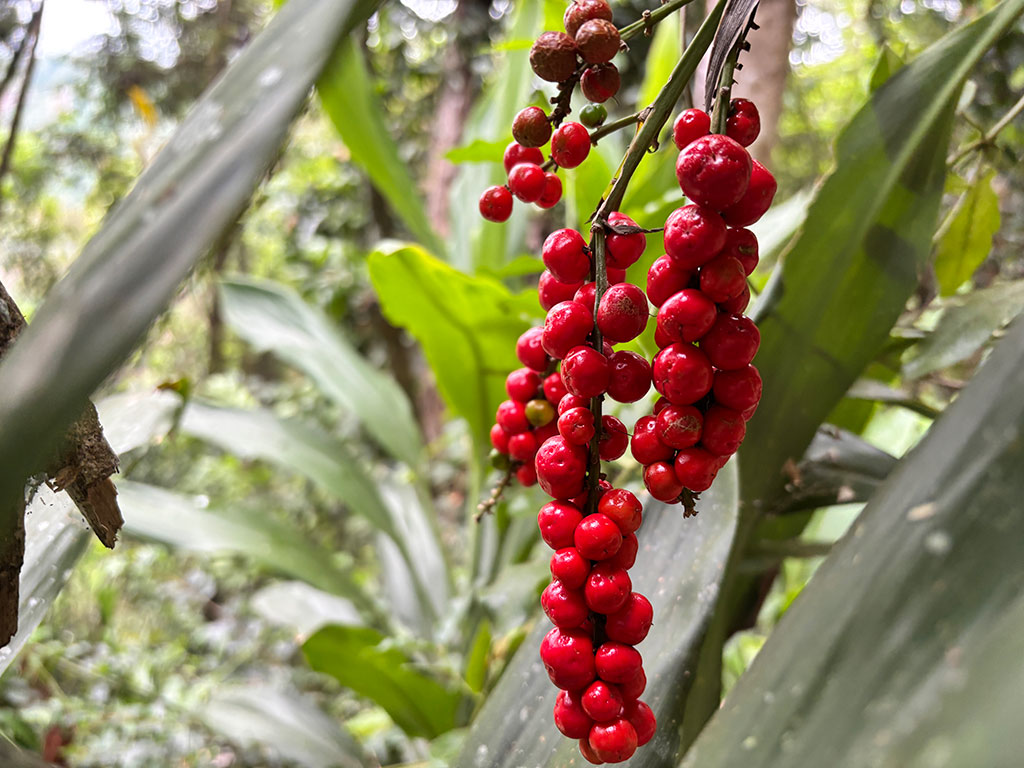
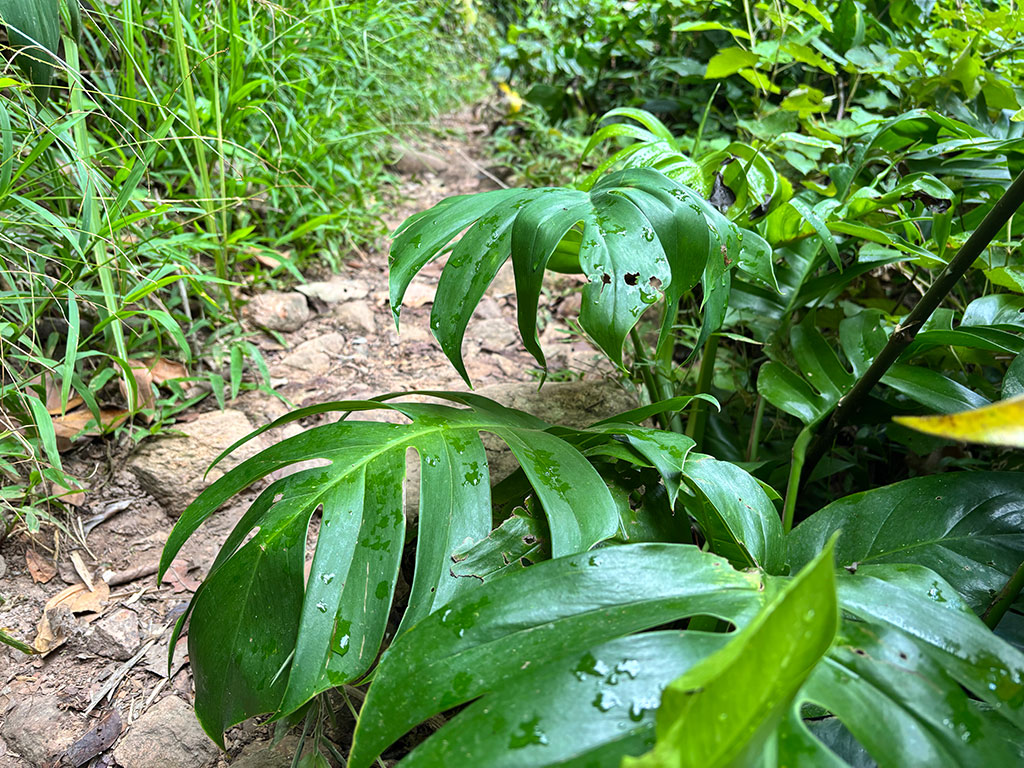
During the Djyinda Walk to and from Wallaman Falls, you move through several different types of vegetation. At the top it’s open forest, but as you descend into the valley there’s closed canopy forest – which is great, because it means you are shaded – and this area is classified as vine thicket forest. There’s climbing lawyer canes, palms and tree ferns, umbrella trees, figs and more. The look out at the bottom is in full sun and provides amazing views of Wallaman Falls. From there, we scrambled over rocks – which were slippery, this was pretty treacherous – to the water’s edge. We slipped into the cool waters and made our way around the side of the pool, to see the falls from a few different angles. Up close the water roared in our ears, the wind whipped droplets into our faces, and we were surrounded by rainbows. It was awesome! We spent some moments literally soaking it all in, before making our way back to the waters’ edge and commencing our return climb to the top.
Wallaman Falls is most definitely the centrepiece of Girringun National Park, which is on the southern end of the Wet Tropics World Heritage Area. Around Cairns, we usually associate the Wet Tropics Rainforest with lush rainforest cloaking the mountains. But at the top of Wallaman Falls along the ridge tops, it’s open forest and is actually quite ‘dry’ – which makes sense given it’s closer to Townsville than Cairns. It’s only when you walk down into the gully and gorge that the vegetation becomes denser with a closed canopy, so it’s very interesting to walk through that transition. Other than Wallaman Falls, the view is dominated by the Herbert River Valley which stretches away into the distance.
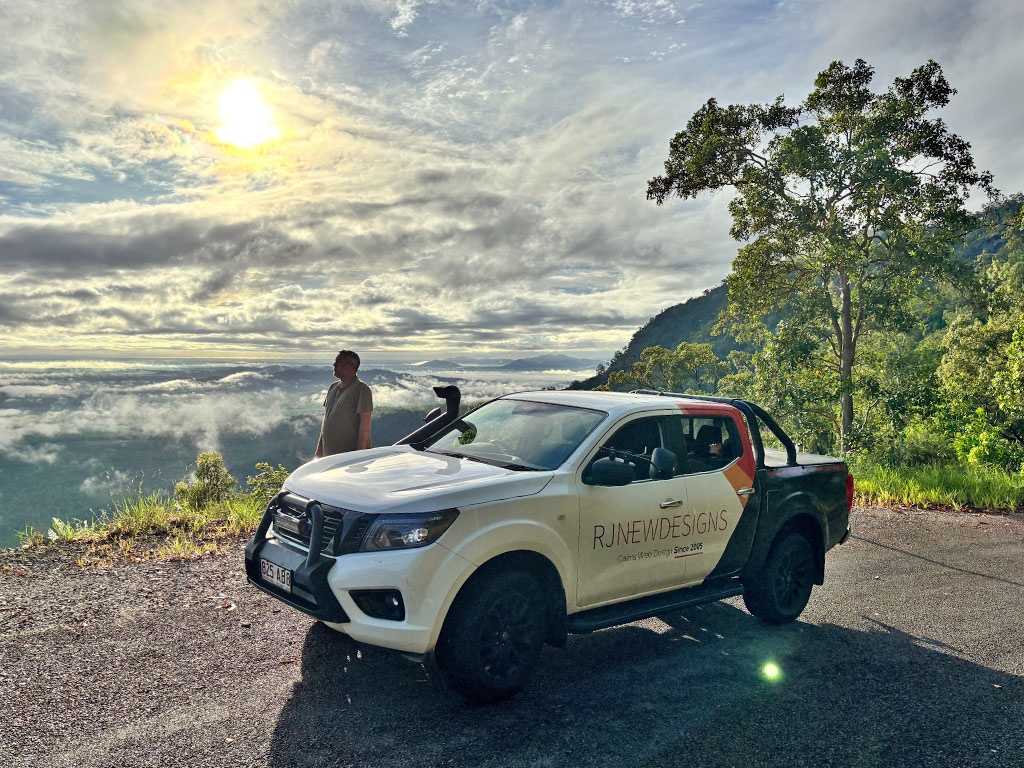
The drive to get to Wallaman Falls from Ingham is a relatively easy one. The road is sealed the whole way and you do not need a 4WD to get to the top lookout. As we left early in the morning, we actually drove up through clouds on our way to the top, which is always magical. We did see a cassowary and three chicks on our way to Wallaman Falls but weren’t fast enough to get any photos. There was plenty of car parking at the top and toilet facilities. There are no facilities on the walking track or at the bottom of the falls. There are no saltwater crocodiles in the Wallaman Falls pool, so it is safe to swim here. We visited in January – so summertime – and started the walk at around 7.30am. It was quite cool when we started the walk but by the time we returned to the car park at 10.45am, it had warmed up and we were grateful to have finished walking for the day.

Our Top Tips For Wallaman Falls. Wear comfortable walking shoes and sunsafe clothes. Take drinking water. Wear insect repellent and sunscreen. Start early. It’s not an easy walk, but it is so very worth it!
Wallaman Falls is in the Girringun National Park, part of the Wet Tropics World Heritage Area in North Queensland Australia. The closest town is Ingham.
Wallaman Falls is 68km from Ingham and it takes around 1 hour and 15 minutes to get there. If you are coming from Cairns, then it’s a 4 hour drive south to Wallaman Falls (or a 2.5 hour drive north from Townsville).
YES! Wallaman Falls is beautiful – I can’t believe I had never been before. It’s Australia’s largest single drop waterfall; its size and scale is impressive from all angles.
Yes, you can swim at Wallaman Falls, we did. The pool of water at the bottom is 20m deep and is freshwater. There is no current to speak of, but the force of the waterfall itself will prevent you from getting close to the ‘splash zone’.
No, you don’t need a 4WD to get to Wallaman Falls. The road is sealed the whole way, but it is steep in places with tight turns and corners.
You can’t camp at Wallaman Falls itself, but there is a camping area in close proximity, which is adjacent to Stony Creek. It is located in the National Park and permits must be arranged: see their website for more information https://parks.desi.qld.gov.au/parks/girringun-wallaman/camping
Yes, the walk to and from the base of Wallaman Falls is difficult. It is classified as a Grade 3 trail and is named Djyinda Walk. It’s 3.2km return and has a constant and steep gradient, which is difficult in both directions, with switchbacks and some stairs. A warning sign at top states: “Only fit people should attempt this walk. People have died here. Others have suffered heat stress and heart conditions walking this track. It might look easy but it becomes steep and rough halfway down.” This is 100% accurate. We strongly suggest getting there early in the morning to do this one, which is what we did.
The walk to and from the car park and bottom of Wallaman Falls is 3.2km return. You should allow around 2 hours to complete the walk itself, plus factor in additional time to enjoy viewing and swimming at Wallaman Falls.
Yes, you can take your kids to Wallaman Falls – although I wouldn’t recommend it for very young children. Our son was 12 years old when we visited and he was fine, but I would think a younger child (4-5 years old) would find the walk challenging. Obviously every child – much like every adult – has different fitness levels, so it’s at your discretion.
No, you can not take your pet to Wallaman Falls, as it is in a National Park, which is also a part of the Wet Tropics World Heritage Area.
You can go walking at Wallaman Falls and swimming. Enjoy views from the lookouts and there’s interpretive signage, so you can learn more about the environment during your visit.
We did see a Cassowary with 3 chicks as we drove towards Wallaman Falls, so they are certainly in the area. I would think it would be unlikely that you would see them at the bottom of the falls, but this is nature, so who can say.
There are no saltwater crocodiles at Wallaman Falls and we did go swimming here.
Wallaman Falls is Australia’s biggest waterfall. To be more specific, it’s Australia’s highest single drop waterfall and is located in the world’s oldest continually surviving tropical rainforests, in North Queensland. The closest township is Ingham. Cairns is around a 4 hour drive north and Townsville around a 2.5 hour drive south.
We started Australia Day by driving to Wallaman Falls. On the way we stopped for cows crossing the road, and as we got higher into the mountains, we saw a Cassowary with three chicks crossing the road, which was awesome. We also saw a feral pig with three piglets. The walk down to Wallaman Falls was really hard and steep, with lots of branches and vines hanging over the pathway. When we got to the bottom, we had to cross some really slippery rocks to get to the water, but it was worth it! The water was cold and the falls was amazing! You could feel the mist coming off it and there were lots of rainbows in the mist. I wanted to get back to the car first, so I sprinted the whole way back.

Wallaman Falls is in a National Park. There are a few different viewing platforms, which makes seeing it accessible to everyone. The top viewing platform is a short walk from the car park. It is slightly higher than the top of the walls, which is on the other side of the Gorge. The second viewing platform looks over Herbert River Valley. The bottom viewing platform looks directly ‘at’ the falls and is accessed on the 3.2km return Djyinda Walk trail. It is open 7 days a week, 365 days a year. Entry and access is free.

© I Love Cairns 2026