- Telephone
- Email
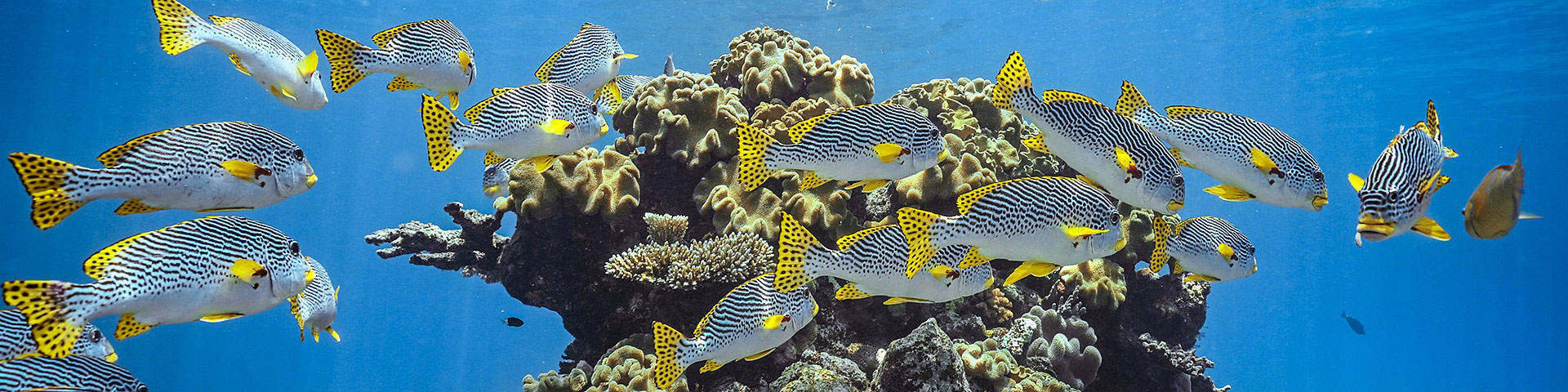
Is there a best time to scuba dive in Cairns? Lots of websites will tell you it’s June to November, but we think that’s a matter of personal preference and diver discretion. Reef tours depart Cairns every day of the year and unless you’re hoping to experience a particular event, such as coral spawning or dwarf minke whales, there is no single ‘best time’ to dive in Cairns. Each month and season offer something slightly different. It’s about co-ordinating your dive priorities, travel plans and broader holiday itinerary, to ensure you have the best time to match your interests across all areas of your holiday. To help you understand what to expect, we’ve prepared a seasonal and then month-by-month guide, covering all you need to know. This based on our firsthand experience. Collectively, Team Johnston has completed over 100 reef trips and nearly 550 dives on the Cairns reefs. We live here and have dived here every month of the year. This content is based on lived experience and supported by our own photos, which were taken on the month they are featured against.
| Water Temp | Reef Highlights | |
|---|---|---|
| January |
28–30°C |
Warm water, reef fish spawning and lots of moon jellies |
| February |
~28°C |
Great time to see turtles, sharks and glassfish |
| March |
~28°C |
Birthing season for blacktip reef sharks, lots of turtles |
| April |
~28°C |
Autumn conditions, lots of juvenile reef fish and stingrays |
| May |
26–27°C |
Cooler water, chance to see large Queensland groupers |
| June |
~25°C |
Dwarf minke whale season |
| July |
~24°C |
Whales and trade winds, with a chance for Manta Rays |
| August |
~24°C |
Humpback whales, winter diving |
| September |
25–26°C |
Spring means colourful coral gardens and marine life |
| October |
~27°C |
Cuttlefish, possible coral spawning on inner reefs |
| November |
~27°C |
Coral spawning on outer reefs |
| December |
~28°C |
Turtle season, triggerfish breeding and nesting |
The Great Barrier Reef is a bucket list destination for divers. The best place to dive the reef is from Cairns. Day tours and liveaboard trips depart every day of the year. They visit coral gardens and lagoons, outer reefs, islands and reef pontoons. What is waiting beneath the surface, remains largely unchanged across the seasons. What does change is the surface and water temperatures, prevailing winds, rainfall and underwater visibility. Before we jump into the month by month guide, it’s important to note that here in Cairns we think of the year as having two seasons rather than four. There’s the Wet Season (November to April), characterised by warmer temperatures, high humidity and tropical rainfall, and the Dry Season (May to October), with cooler temperatures, less rainfall and prevailing south-easterly trade winds. For those planning a Cairns diving holiday, we’ve provided detailed information for each month of the year, from January to December. Let’s dive into the details …

January is the middle of summer in Cairns. Warm clear waters, fish spawning and an abundance of marine life.
January is one of our favourite times to go diving in Cairns. It’s the middle of summer and daily temperatures range from 31.5°C during the day, to 23.8°C overnight (88.7 °F – 74.8 °F), which means we’re always keen to get in the water! The water temperatures at the reef are usually between 28-30°C in January, which means there’s no wetsuits required. Reef operators do provide lycra suits for sun protection. There’s lots happening under the water this month. Some reef fish are spawning, including wrasse, parrotfish and damselfish, and there’s lots of different types of jellyfish, including moon jellies. You may have heard about jellyfish and marine stingers in Cairns. Please note the larger box jellyfish are primarily associated with coastal waters, while Irukandji can occur inshore and offshore. Serious stings on the outer reefs are uncommon, and the protective lycra suits provided by operators help reduce the risk.
Underwater visibility on the Cairns reefs in January can vary from 30m to 5m, which is primarily influenced by rain and wind. In January the Cairns weather is hot and wet, with the possibility of tropical cyclones. Average rainfall is 404mm. Reef operators will pick the best destination on your day of travel, to maximise your experience in the water. Rainfall can affect visibility on inshore reefs, but not so much on the outer reefs, where wind, waves and currents have a greater influence.
What else to consider. January is waterfall weather in Cairns, so when you aren’t on the reef, you can spend your time exploring the rainforest rivers and waterfalls. This can be done on self-drive trips, if you’re happy to explore on your own, or book a guided tour. For adventure seekers, consider adding a white water rafting trip to your holiday we highly recommend them and can book them for you.

February is the end of summer in Cairns. Warm water, anemonefish and lots of glass fish. Top pick is outer reef diving.
We always dive in February, because that’s our birthday month and diving is our favourite thing to do! This is a great month to see turtles on the reef, and it’s still nesting and hatching season for green and hawksbill turtles. It’s also a great month to see sharks and large schools of glass fish, which are like silver bullets moving through the warm water. Daily temperatures are the same as January, ranging from 31.5°C – 23.8°C (88.7°F – 74.8°F). The average water temperature is still warm too, averaging 28°C (82°F), so generally speaking still no need for wetsuits. Lycra suits are provided for sun protection and your comfort in the water.
February is Cairns’ last month of summer and is typically quite wet, with an average rainfall of 436mm. High levels of rainfall can impact underwater visibility and colour, with the usually blue water sometimes being a little blue-green, as you can see in the photo. For this reason, we recommend choosing an Outer Reef diving trip, where visibility is less impacted by coastal rainfall and runoff. Please note there’s also the possibility of cyclones and/or seasonal storms in February, which are usually short in duration. We can go from torrential rain to bright sunshine in a few hours.
What else to consider. February is typically the time when the Wet Tropics World Heritage Area receives the highest rainfall for the year. You can expect to find the rainforest lush and thriving, with brilliant tree ferns and basket ferns. Clouds hug the mountains, adding to the atmosphere. It’s also waterfall weather and we highly recommend the Atherton Tablelands for this, particularly Millaa Millaa Falls and the waterfall circuit.

March is the start of autumn in Cairns. Our seasons turn slower than most, so you can still expect warm water, turtles, glass fish and juvenile fish.
March marks the turning of the seasons, but here in Cairns autumn has a very slow start weather-wise. The average daily temperatures range from 30.7°C during the day to 23.2°C overnight (87.26 °F – 73.76 °F), while the water temperature averages 28°C (82°F), so very similar to February. There’s also still a relatively high chance of tropical downpours, with the average rainfall for March being 424mm. So, what does this mean for diving? Looking back at our March trips over the years, it means that underwater visibility can vary from 5m to 20m, but marine life remains abundant. March is also within the birthing season for blacktip reef sharks, who give birth to live young called pups, so keep your eyes peeled for these guys. We have always seen turtles in March and it’s still hatching season for green and hawksbill turtles. March is also a great time of year to spot the juvenile fish of many species, which sometimes look nothing like their adult counterparts.
What will conditions be like during your visit? That will depend on what the weather has been doing in the days and weeks prior to your visit, which we can’t predict. I would say that if you are researching and booking a March dive trip to the Great Barrier Reef, aim for later in the month as it gives you a better chance of missing the rain. Always check the forecast closer to your travel dates. With warm waters, you should not need a wetsuit. Lycra sunsuits are provided for your protection and comfort in the water.
What else to consider. March is an awesome time to explore the rainforest and its rivers. Many Daintree day tours combine a visit to Mossman Gorge with a wildlife cruise on the Daintree River, searching for saltwater crocodiles. The Atherton Tablelands is great for waterfalls and crater lakes. You can self-drive to explore these destinations, and we have some suggested itineraries you can follow. Other popular activities include white water rafting and river tubing; we’ve done this and recommend it.

In April the rainfall in Cairns drops considerably. Divers can expect clear waters and relatively calm seas. Look at the sandy sea floor for bluespotted stingrays.
April is when the rain starts to disappear and the evenings become a touch cooler in Cairns. Average daily temperatures range from 29.4°C during the day, to 21.8°C overnight (84.9 °F – 71.2 °F), with water temperatures of around 28°C (82°F). The rainfall decreases 50% on that of March, with the average recorded rainfall in April being 201mm. As the month progresses, the humidity decreases and the wind increases. Reef operators provide wetsuits and lycra sunsuits, so you can choose what’s needed to keep you comfortable in the water. So, what’s happening in the water? Underwater visibility is usually pretty good, ranging from 10-20m. There’s still lots of glassies and juvenile fish, schools of chromis and fusiliers streaming around the coral gardens and walls. Keep an eye on the sandy sea floor for lagoon and bluespotted stingrays and reef sharks.
What else to consider. Cairns starts to cool down and dry out in April, giving you beautiful autumn days. For rainforest visits, a combined trip on Skyrail Rainforest Cableway and Kuranda Scenic Railway takes you to Kuranda Village. While there, a must-see is Kuranda Koala Gardens, where if you’re lucky you might spot a koala joey in its mother’s pouch. Other animals featured here are kangaroos and wallabies, possums, crocodiles, wombats and quokkas. Next door is Birdworld, where you can get up close and personal with a Southern Cassowary.

May marks the end of autumn. It’s mainly clear blue sky days, with some awesome underwater conditions.
In May, the days and water temperatures start to cool down. Average daily temperatures range from 27.7°C during the day, to 20°C overnight (81.8°F – 68°F), with water temperatures of around 26-27°C (78-80°F). For Cairns people, this means a return to wetsuits for diving. May is a bit of a shoulder season for tourism in Cairns, with the peak season being June to August, this means there is usually lots of availability on the reef boats for day diving and liveaboard trips. In May we do have big blue sky days and some glass out days, where the ocean surface is smooth and calm. Underwater visibility can vary from 8-25m. Highlights of May diving in Cairns can include seeing large Queensland grouper and exploring the swim-throughs on the outer reefs. All reef operators have wetsuits and lycra suits for your comfort in the water.
What else to consider. Cairns is uniquely positioned to offer visitors access to the reef, rainforest and outback. The outback is a seasonal destination, with most places and attractions closed over the summer months. This is due to high temperatures and road closures. By the time May arrives they are all open and operating, so think about including a Savannah adventure in your Cairns holiday. You can visit Chillagoe with its ancient limestone caves and karsts on a day tour, which includes a stop at Mareeba’s Granite Gorge to see the adorable rock wallabys.

June is an exciting time on the Cairns reefs, with the return of the whales! Divers should investigate the dedicated dwarf minke whale trips, if budget and time allow.
June heralds the start of winter in Cairns and the return of whales to our waters. Average daily temperatures range from 26.2°C during the day, to 18°C overnight (79.16°F – 64.40°F), with water temperatures of around 25°C (77°F). You will be reaching for the wetsuits to keep you comfortable in the water. A highlight on the Cairns diving calendar is the Dwarf Minke Whale trips, which visit the Far Northern Ribbon Reefs. Due to distance involved, these are all liveaboard trips. In addition to the opportunity to swim with Dwarf Minke Whales, you can scuba dive some of the best sites on the Great Barrier Reef. These trips have departures in June and July; book in advance to secure your space. Meantime on the Cairns reefs, you have a higher than usual chance of seeing Manta Rays, as well as all the ‘normal’ marine life. Underwater visibility, particularly on the outer reefs, is usually excellent at this time of year from 15-30m. The average rainfall in Cairns in June is 45.7mm.
What else to consider. June is the start of peak tourist season in Cairns, with domestic and international tourists starting to arrive in higher numbers. The milder day time temperatures make exploring the rainforest on hiking tracks and trails a comfortable experience. Please note female Cassowaries start laying eggs this month, so keep your eyes peeled for these beautiful birds. There’s lots of self-guided walks in the Daintree and Atherton Tablelands region, or jump on a guided tour to make life easy. June also marks the start of our ‘event’ season including Cairns Airport IRONMAN and more, as well as bustling local markets.

July is the middle of winter in Cairns. Underwater visibility on the outer reefs can be up to 30m. Keen whale watchers might see humpback whales in the waters off Cairns.
July is the middle of winter in Cairns. Average daily temperatures range from 25.9°C during the day, to 17.2°C overnight (78.62°F – 62.96°F), with water temperatures of around 24°C (75°F). The Dwarf Minke Whale liveaboard trips are still departing Cairns this month, providing an added bonus of visiting some of the most famous dive sites on the Great Barrier Reef, including the Cod Hole. Here you can scuba dive with diver-sized Potato Cod (as pictured above), which was a bucket-list experience for me. Closer to Cairns, Humpback Whales are often seen in the offshore waters around Fitzroy Island. These whales are seasonal visitors to Cairns’ Great Barrier Reef, coming here to breed and calve. There’s still an increased chance of seeing Manta Rays in July, as well as the usual reef residents, sharks and rays, turtles, giant clams and a stunning array of fish in all shapes, sizes and colours. Please note the south-easterly tradewinds can sometimes be blowing strongly this month, which can lead to choppy travel and surface conditions. If you suffer from seasickness, consider taking preventative medication prior to your reef trip. Underwater visibility, particularly on the outer reefs, is usually excellent at this time of year from 15-30m. The average July rainfall in Cairns is 33.2mm.
What else to consider. July is part of peak tourist season in Cairns. There’s big blue sky days, perfect for exploring the many amazing national parks and destinations around the region. Daintree day tours are popular, with most including a stop at Mossman Gorge and wildlife cruise on the Daintree River. The outback is open for business, with the cooler temperatures making exploring more comfortable. Closer to home, the events are happening around Cairns, including our regional Cairns Show, the Cairns Indigenous Art Fair and many local markets.

August scuba diving off Cairns is best on the outer reefs and reef pontoons, where underwater visibility is between 15-30m.
August is the last month of winter in Cairns. Underwater temperatures are still sitting around 24°C (75°F) and the reef boats provide wetsuits, to keep you comfortable in the water. The Dwarf Minke Whale trips have ended, but the Humpback Whales can still be seen in the waters around Fitzroy Island. For the best chance to see these and enjoy a simply epic trip to the reef, we recommend combining a scenic heli flight to the Sunlover pontoon, with time in the air and on the water. We did this in 2026 and saw a Humpback Whale mother and calve, which was amazing! The deep blue waters of the Great Barrier Reef are stunning at this time of the year and the underwater visibility is still sitting around 20-30m. Please note it’s still very windy in Cairns in August, which can make surface conditions and travel to and from the reef, uncomfortable for some people. If you are concerned about seasickness, then we highly recommend some preventative medication. Julie suffers from seasickness, so she wrote a Cairns’ best reef trips to avoid seasickness story for easy reference. The average August rainfall in Cairns is 26.9mm, making it the driest month of the year.
What else to consider. There’s lots happening in and around Cairns in August. There’s Festival Cairns which is a 10-day event featuring live music, theatre, art installations and more, as well as the Cairns Amateurs horse racing event. Port Douglas has its annual Food and Wine Festival and there’s local markets most weekends. The rainforests and waterfalls are open, as are the outback destinations, so there’s lots of activities and tours to choose from. August is still peak tourist season, so make sure to book your accommodation and tours well in advance.

September is the start of spring, so there’s lots happening on the Great Barrier Reef. Some species of fish prepare to spawn and turtles begin gathering for mating.
Anecdotally amongst the Cairns dive industry, the ‘ber’ months are some of the best months for diving. For locals the waters are warming up, making it comfortable to do multi-dive-days, the underwater visibility is excellent and there’s a high chance of glass-out days. September, October, November and December – Dive Time! At the start of spring in Cairns the weather is pretty mild, with average daily temperatures range from 28.2°C during the day, to 18.8°C overnight (82.67°F – 65.84°F) and water temperatures around 25-26°C (77-78°F). The clear blue waters are full of colourful coral gardens and an abundance of marine life. Underwater visibility ranges from 15-25m, making it excellent for underwater photography and exploration. What will you see diving in Cairns in September? Sea turtles are starting to gather for mating, so are frequently seen. Coral trout and snapper are also starting to gather at spawning sites. The winds have dropped off too, so reef transit and surface conditions are more stable and comfortable. The average September rainfall in Cairns is 34.7mm.
What else to consider. Spring is an awesome time to visit the Wet Tropics World Heritage Area. The Southern Cassowaries are nesting and lots of plants are flowering, including rainforest orchids, lilly pilly, tree waratah and silky oaks. In turn there’s an abundance of birds and butterflies, bringing their own splashes of colour and song to the rainforest. If you’re looking to extend your Great Barrier Reef time, consider booking a room at Green Island or Fitzroy Island. Both are wonderful places to stay, offering snorkelling from the beach and relaxed island vibes.

October is a great time of year to see cuttlefish on the Cairns reefs. It’s breeding and nesting season, so females will be guarding their eggs.
We always dive in October, because it’s Ethan’s birthday and it’s our favourite family thing to do. This is a particularly great time of year to spot and spend time with cuttlefish. October is part of their nesting season, so female cuttlefish will often be seen guarding their eggs, located in coral and reef crevices. These gentle creatures won’t mind you chilling out with them and it’s simply amazing to see them change colour and move effortlessly through the water. Speaking of water, the underwater temperature on the Cairns reefs in October is around 27°C (80.6°F), so lycra sunsuits are generally sufficient for your comfort and warmth. Depending on the year, actual water temperatures and lunar cycles, their may be a coral spawning event on the inner reef in October. If not, then it will happen in November. The daily temperatures in Cairns range from 29.7°C during the day, to 20.7°C overnight (85.46°F – 69.26°F) and the average rainfall in October is 47.5mm.
What else to consider. October delivers some stand-out days weather wise. Big blue sky days and warmer weather, making it a perfect time of year to enjoy swimming at Mossman Gorge, or at one of the areas many waterfalls. Josephine Falls is a popular spot, with a natural rockslide in a rainforest river, splashing down into a cool pool. You can self-drive or book a guided tour. In the rainforests the flowering continues, with the bright red and yellow flowers of the Black Bean Tree adding a splash of colour to the canopy. October is also the month most of the outback destinations and attractions close down for the year.

Coral spawning in November on the Great Barrier Reef. Book a liveaboard trip for the best chance to see it and large school of bumphead parrotfish.
Coral spawning happens every year on the Great Barrier Reef, usually in November and December on the outer reefs. What is it? It’s the mass reproduction event for the corals of the reef. It’s triggered by water temperature and the lunar cycles, with spawning usually happening a few nights after the full moon. It’s a significant event, when hundreds of corals simultaneously release their eggs and sperm into the water. The best chance for you to witness coral spawning on the Great Barrier Reef is on a liveaboard trip, particularly if you stay at sea for a few nights. In addition to coral spawning, liveaboard trips provide the opportunity to do night dives and early morning dives, with morning dives providing the best chance to see large schools of bumphead parrotfish (as pictured above). For divers the underwater visibility is awesome, up to and beyond 30m at some outer reef sites. The weather is pretty ‘stable’ in Cairns in November, making for pleasant reef transit and surface conditions. November’s daily temperatures in Cairns range from 30.8°C during the day, to 22.4°C overnight (87.44°F – 72.32°F) and the average rainfall in November is 87.9mm.
What else to consider. November is the end of spring and at this time of year, Cairns is sliding into summer. The days are warm and humid, with the chance for afternoon or overnight storms. Some days the clouds are low, wrapping around the rainforest mountains. The frogs and cicadas become quote vocal at this time of year, setting the evening soundtrack. Locals are flocking to rainforest rivers, waterfalls and crater lakes to cool down. The Atherton Tablelands is particularly popular, for its cooler daytime temperatures. Lots of flowers are blooming across the city, including masses of colourful frangipani and it’s mango season, so you’ll see lots of these too.

December is the start of summer in Cairns. Enjoy perfect days diving on the reef and keep an eye out for turtles and titan triggerfish.
December is one of our favourite months to dive. The water is lovely and warm, the coral gardens are vibrant and following on from the coral spawning and fish spawning (in October and November), there’s an abundance of life on the reef. Turtles are particularly present, with large numbers of green sea and hawksbill turtles seen around the islands, pontoons and the inner and outer reefs. It is breeding / nesting season for the Titan Triggerfish, which is something to be aware of as a diver. These fish are magnificent to look at, but very protective and aggressive while nesting. The boats will provide more information regarding this, with accompanying pictures. It’s also breeding season for anemonefish, so have a close look around the anemones where they lay clusters of eggs. Underwater visibility in December on Cairns Great Barrier Reef is usually between 10-20m. December’s daily temperatures range from 31.5°C during the day, to 23.4°C overnight (88.70°F – 74.12°F), but it can feel much warmer than this due to high levels of humidity. The average rainfall in December is 193.8mm.
What else to consider. Summer arrives quickly in Cairns! The days get lighter earlier, go longer and are hotter. The overnight and afternoon storms cool things down. December is a very ‘alive’ month in Cairns, there’s lots of flowers, lots of tropical fruits and the animals of the reef and rainforest are all very active and visible. Keep an eye out for the umbrella tree fruits, which attract rainbow lorikeets, and the mango and lychee trees which are full of fruit.

We’ve personally experienced nearly every tour we offer and have extensive knowledge of the Cairns region, with a special focus on snorkeling and diving on the Great Barrier Reef. Best of all, our advice is completely free! Why not take advantage of our expert travel and package recommendations?
There is no single best month to scuba dive in Cairns, as the Great Barrier Reef offers excellent diving opportunities throughout the year. If you prefer warm water, consider December to March, when temperatures are around 28°C. June and July are special months for dwarf minke whale encounters, while October and November can deliver spectacular underwater visibility and seasonal reef activity. The best month depends on what you want to see and experience.
Yes. Reef diving tours depart Cairns throughout the ‘wet season’, which generally runs from November to April. Water temperatures are warm, marine life is abundant and you can still enjoy excellent underwater visibility, particularly at outer reef locations. Rainfall doesn’t automatically mean poor diving conditions, although strong winds, tropical storms and cyclones can affect reef tours.
Underwater visibility on the Cairns reefs varies throughout the year, influenced by wind, waves, currents and weather conditions. Based on our diving experiences, we have enjoyed some of our clearest conditions between June and November, with visibility reaching 30m or more on some outer reef sites. However, we’ve also experienced excellent visibility during summer. No month guarantees clear water, it depends on prevailing conditions, currents and tides.
Water temperatures on Cairns’ Great Barrier Reef range from around 23–30°C throughout the year. The warmest conditions occur during summer, particularly January and February, while July and August are usually the coolest months. Reef operators provide wetsuits and protective Lycra suits, so you can choose what keeps you comfortable during your dives.
June and July are the main months for dwarf minke whale encounters on the Far Northern Ribbon Reefs. Dedicated liveaboard trips depart Cairns during this period, combining scuba diving with opportunities to swim or snorkel with these incredible animals. Humpback whales also visit the waters around Cairns during winter and early spring, with sightings possible during reef tours. Wildlife encounters are never guaranteed.
Coral spawning generally occurs between October and December on the Great Barrier Reef, depending on water temperatures, lunar cycles and reef location. This spectacular reproductive event usually happens at night, a few days after the full moon. If witnessing coral spawning is on your bucket list, consider booking a multi-night liveaboard diving trip. Even then, the timing is unpredictable and sightings cannot be guaranteed.
Both seasons offer different advantages. Summer delivers beautifully warm water, often around 28–30°C, and plenty of marine life activity, but it’s also the wet season. Winter brings cooler water, generally lower rainfall and opportunities to see migrating whales. However, winter is also the south-easterly trade wind season, which can create choppy sea conditions. We enjoy diving in both seasons and wouldn’t rule out either.
Cairns liveaboard diving trips operate throughout the year, and the best time depends on your priorities. June and July are popular for dedicated dwarf minke whale expeditions to the Ribbon Reefs. October and November can offer wonderful diving conditions, while November and December provide opportunities to witness coral spawning. If your main goal is to complete as many dives as possible, a liveaboard is an excellent choice at any time of year, subject to weather conditions.
The best time to scuba dive in Cairns is the time that suits you and your travel itinerary. There’s a reason reef trips depart Cairns every day and it’s because the reef is amazing, every day. Summer brings beautifully warm water and abundant marine life; with the possibility of spectacular calm days we refer to as ‘glass out’ days. Winter offers cooler temperatures, excellent underwater visibility and seasonal whale encounters, although the trade winds can make conditions choppy. Spring is another wonderful time to dive, with warming waters and the possibility of witnessing coral spawning. Whether you choose a day trip or liveaboard, the coral gardens, colourful fish, turtles, sharks and incredible diversity of marine life are waiting to be explored.
Our advice? Choose your travel dates around your interests and broader holiday plans, rather than chasing the perfect month. There’s no single best time to dive Cairns, just different experiences to enjoy throughout the year.

© I Love Cairns 2026
